

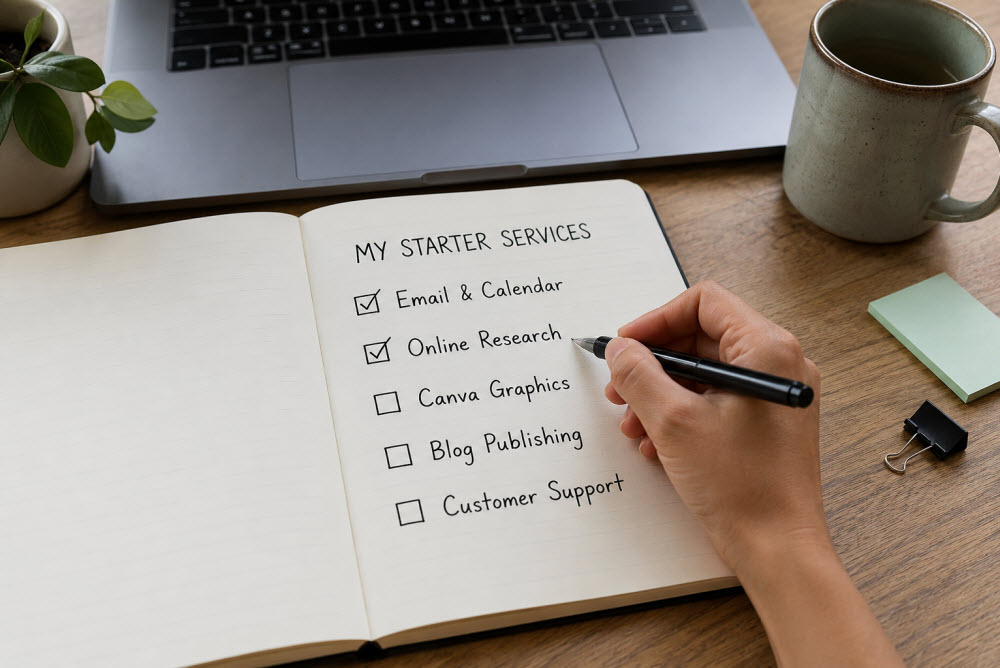
15 Beginner-Friendly Virtual Assistant Services You Can Offer
One of the hardest questions for an aspiring virtual assistant is surprisingly simple: What service can I offer if I am only beginning?
You may see experienced VAs advertising advanced automation, technical SEO, sales funnels, bookkeeping, or complete business management. Comparing yourself to them can make it seem as though you have nothing valuable to offer.
But many businesses need help with practical, repeatable responsibilities: organizing information, updating content, responding to routine questions, preparing documents, and keeping work from being forgotten. These tasks may be beginner-friendly, but they are not meaningless. When completed accurately and consistently, they give business owners more time and create smoother operations.
This guide covers 15 realistic virtual assistant services for beginners, the skills each one requires, how you can practice, and where you must be careful. You do not need to offer all of them. Your goal is to identify two or three related services that fit your abilities and can be developed into a trustworthy offer.
What Makes a VA Service Beginner-Friendly?
A beginner-friendly service usually has a clear process, manageable risk, and room to practice without handling a real client’s sensitive systems immediately.
That does not mean the work requires no skill. Even simple responsibilities demand communication, organization, judgment, accuracy, and professional reliability.
A suitable beginner service should be something you can:
- Understand through reputable instruction
- Practice in a safe environment
- Demonstrate through an honest sample
- Perform without pretending to hold qualifications you do not possess
- Check for accuracy before submitting
- Explain in terms of the client result it supports
1. Email Inbox Organization
An inbox can become difficult to manage when routine messages, newsletters, customer questions, invoices, and urgent requests arrive in the same place.
A beginner VA may help create folders or labels, archive outdated messages, flag priorities, identify emails requiring a reply, and prepare routine drafts for approval.
Skills needed: Careful reading, organization, discretion, and clear writing.
Practice idea: Organize your own inbox using categories and create a short explanation of the system.
Client result: A cleaner inbox where important messages are easier to find and act upon.
Be careful: Never delete messages, send replies, or change account settings without clear authorization.
2. Calendar and Appointment Management
Calendar support may include creating events, confirming appointments, adding meeting links, checking time zones, sending reminders, and identifying scheduling conflicts.
Skills needed: Accuracy, time-zone awareness, prioritization, and professional communication.
Practice idea: Build a sample weekly calendar containing client calls, focus time, deadlines, and travel time between appointments.
Client result: A reliable schedule with fewer missed meetings, conflicts, and last-minute surprises.
Be careful: Do not accept, cancel, or move important appointments unless the client has explained which decisions you are allowed to make.
3. Online Research
Businesses may need information about competitors, suppliers, potential venues, software options, content topics, or publicly available industry resources.
Good research is more than copying the first search results. A VA should use credible sources, organize findings clearly, record links, distinguish fact from opinion, and note anything that could not be verified.
Skills needed: Search ability, critical thinking, summarizing, and source checking.
Practice idea: Compare five tools or services in a spreadsheet using consistent criteria.
Client result: Organized information that helps the client make a faster, better-informed decision.
Be careful: Respect privacy, website terms, copyright, and the difference between public information and information that should not be collected.
4. Data Entry and Record Updates
Data entry may involve adding contact details, updating spreadsheets, transferring information between approved systems, correcting formatting, or checking records for missing fields.
The work sounds simple, but careless data can cause duplicate contacts, incorrect reports, lost follow-ups, or customer problems.
Skills needed: Accuracy, concentration, consistency, and basic spreadsheet knowledge.
Practice idea: Create a clean contact list from fictional information, then sort, filter, and check it for duplicates.
Client result: Reliable records that the business can actually use.
Be careful: Confirm formatting rules and never invent missing information to make a record appear complete.
5. Document and Spreadsheet Formatting
A VA may be asked to turn rough notes into a readable document, apply headings, format tables, clean a spreadsheet, or prepare a simple tracker.
Skills needed: Attention to detail, basic document and spreadsheet functions, and visual consistency.
Practice idea: Convert an unformatted set of notes into a polished procedure, or create a job application tracker with filters and status fields.
Client result: Information that is easier to read, update, share, and use.
Be careful: Preserve the original meaning and data. Ask before changing wording, formulas, or document structure in a way that could affect the content.
6. Digital File and Folder Organization
Remote businesses can accumulate years of documents, images, reports, and duplicate downloads. A beginner VA may create an agreed folder structure, apply consistent file names, identify duplicates, and move files into their correct locations.
Skills needed: Logical organization, consistency, and careful file handling.
Practice idea: Organize a sample project folder by client, content type, status, and date.
Client result: Less time wasted searching for the correct document or latest version.
Be careful: Never permanently delete, rename, or relocate important files without approval and a recovery plan.
7. Customer Email Support
Customer support may involve answering routine questions using approved information, checking order status, directing customers to helpful resources, updating records, and escalating issues.
Skills needed: Patience, empathy, accurate writing, careful reading, and judgment.
Practice idea: Draft replies to fictional questions about delivery, account access, product features, and refunds.
Client result: Customers receive timely, consistent assistance while complex issues reach the appropriate person.
Be careful: Do not promise refunds, discounts, replacements, or technical solutions beyond the authority and policies the client has provided.
8. Social Media Post Scheduling
A scheduling VA may upload approved captions and graphics, select the correct account, add links or hashtags, schedule for the intended time zone, and confirm publication.
Skills needed: Organization, platform awareness, accuracy, and respect for approval processes.
Practice idea: Prepare a one-week sample content calendar and simulate the scheduling checklist without publishing publicly.
Client result: Content is published consistently and on time.
Be careful: Confirm the final caption, creative, platform, date, time zone, and account before scheduling. Never publish unapproved material.
9. Simple Canva Graphic Preparation
Beginners can use Canva to prepare straightforward social graphics, presentation slides, checklists, and branded quote cards from an existing template or clear brand guide.
Skills needed: Alignment, spacing, readability, brand consistency, and basic image handling.
Practice idea: Create three coordinated social posts for a fictional business using the same colors, fonts, and layout style.
Client result: Clean, consistent visual materials ready for review or publication.
Be careful: Do not describe yourself as a graphic designer unless you have the necessary expertise. Check asset licensing and never use images simply because they appeared in an online search.
10. Blog Formatting and Publishing
A blog publishing VA may transfer approved copy into a content management system, apply headings, add links, upload images, select categories, write image alt text, preview the layout, and save or publish according to instructions.
Skills needed: Careful formatting, basic website knowledge, quality checking, and written accuracy.
Practice idea: Format an article on a private or test WordPress site and check it on desktop and mobile.
Client result: Polished, readable articles published correctly and consistently.
Be careful: Do not rewrite approved content, change site settings, or publish before final authorization.
11. WordPress Content Updates
Beyond blog posts, a beginner WordPress VA may update supplied text, replace approved images, correct broken links, adjust contact information, or make simple page changes within an established layout.
Skills needed: WordPress familiarity, attention to layout, image preparation, and cautious editing.
Practice idea: Create a test page, update its content, and document a before-and-after quality checklist.
Client result: Website information remains accurate, current, and professionally presented.
Be careful: Use a test environment when possible. Do not update plugins, edit code, change themes, or modify important settings without authorization and appropriate backups.
12. E-commerce Product Entry
Product entry can include adding supplied titles, descriptions, prices, images, categories, variations, and inventory details to an online store.
Skills needed: Accuracy, product organization, image handling, and attention to customer-facing details.
Practice idea: Create five fictional products in a spreadsheet or test shop, including consistent names, descriptions, categories, prices, and image files.
Client result: Organized product listings that customers can understand and purchase from confidently.
Be careful: Prices, stock, shipping information, tax settings, and variations can affect real transactions. Verify every detail and do not guess missing product data.
13. Lead Research and CRM Updates
A lead research VA may identify potential businesses or contacts using approved public sources, record relevant information, update a customer relationship management system, and maintain outreach status.
Skills needed: Ethical research, data accuracy, organization, and respect for privacy.
Practice idea: Build a fictional prospect list using clearly defined criteria and publicly available business information.
Client result: A relevant, organized list that supports responsible outreach and follow-up.
Be careful: Follow privacy laws, platform rules, and client policies. Avoid collecting unnecessary personal information or using questionable scraping methods.
14. Meeting Notes and Task Follow-Ups
A VA may attend approved meetings, record decisions, identify action items, assign owners, note deadlines, and update the team’s task system afterward.
Skills needed: Listening, concise writing, organization, and the ability to distinguish discussion from a confirmed decision.
Practice idea: Watch a public educational video and turn it into structured notes with key points, decisions, and action items.
Client result: Important commitments do not disappear after the meeting ends.
Be careful: Confirm sensitive information, do not record meetings without permission, and avoid adding your interpretation as though it were an agreed decision.
15. Simple Procedures and Checklists
When a business repeats the same task, a VA can document the approved steps in a simple standard operating procedure or checklist.
Skills needed: Clear writing, observation, organization, and process thinking.
Practice idea: Document a familiar process such as preparing and scheduling a social post, including prerequisites and final checks.
Client result: Repeatable work becomes easier to teach, complete, and review consistently.
Be careful: Test the instructions before finalizing them. Mark assumptions clearly and have the process owner confirm that nothing important is missing.
How to Choose Two or Three Services
Do not select services simply because they appear easy. Choose responsibilities that connect three things:
- Skills you already possess or can responsibly develop
- Work you are willing to practice repeatedly
- A result that businesses genuinely need
Look for related services that naturally belong together. Examples include:
- Administrative support: Inbox organization, calendar management, and meeting follow-ups
- Content support: Research, Canva preparation, scheduling, and blog publishing
- Website support: Blog formatting, WordPress updates, and file organization
- E-commerce support: Product entry, customer email support, and record updates
A focused combination is easier to explain and practice than an unrelated list of fifteen services.
Turn Tasks Into a Client-Focused Offer
Clients are not buying access to your checklist; they are buying relief, consistency, or progress.
Instead of saying:
I offer data entry, Google Sheets, email, and calendar management.
Try:
I help busy business owners keep their inboxes, schedules, and administrative records organized so important messages and deadlines do not get overlooked.
The second version explains why the tasks matter.
Your beginner offer should identify who you help, what part of their workload you can manage, and what improvement your support creates. Keep the promise realistic and specific enough to prove.
Services Beginners Should Approach Carefully
Some responsibilities carry financial, legal, technical, or reputational risk. Do not offer them independently without suitable knowledge, authorization, and safeguards.
These may include:
- Bookkeeping, payroll, tax preparation, or financial advice
- Legal, medical, or regulated-industry advice
- Advanced website development or server changes
- Paid advertising budget management
- Cybersecurity work
- Contract negotiation or promises made on a client’s behalf
- Unsupervised handling of large payments or refunds
You may eventually develop these skills or provide limited administrative support under qualified supervision. Being willing to say “This is outside my current scope” is part of professional judgment.
Small Services Can Become a Meaningful Career
Your first service may look ordinary. It might be organizing an inbox, formatting a document, adding a product, or preparing meeting notes. Yet ordinary work completed with extraordinary care is often what makes a client remember and trust someone.
You are not required to begin with the most technical role or the boldest promise. Start with work you can perform responsibly. Learn the entire process. Check the details others might overlook. Communicate clearly when something is uncertain.
As your experience grows, a small responsibility may lead to deeper skills, a specialization, or a long-term client relationship. Your career does not have to begin impressively. It needs to begin honestly—and become dependable.
“Every lasting career begins with someone quietly deciding that even the smallest responsibility deserves their very best.”
Frequently Asked Questions
Here are clear answers to some of the most common questions readers have about this topic.
How many VA services should a beginner offer?
Two or three related services are usually enough for a focused beginning. You can add or remove services after gaining experience and learning what clients need.
Can I offer a service if I have only practiced it?
You can apply for suitable beginner opportunities if you describe your experience honestly. Show a clearly labelled sample and avoid suggesting that practice work was completed for a paying client.
Should beginners charge separately for every small task?
You can charge hourly, by project, or through a defined service package. Whichever model you use, clarify the scope, revisions, deadlines, and work that would require an additional agreement.
Do I need different tools for every service?
No. Email, shared documents, spreadsheets, cloud storage, and task management support many services. Learn additional platforms when your chosen direction or client requires them.
What if a client asks me to do something outside my skills?
Be honest. Explain what you can handle, what requires guidance, and what is outside your scope. Do not experiment with a client’s business where a mistake could cause serious harm.
Key Takeaways
Before you close this page, here are the most important lessons to carry with you:
- Beginner-friendly does not mean unimportant. Accurate, dependable support with routine responsibilities can create meaningful value for a business.
- You do not need to offer everything. Choose two or three related services that match your skills, interests, and willingness to practice.
- Describe the result, not only the task. Show clients how your support creates organization, consistency, time, or a better customer experience.
- Honest samples can demonstrate readiness. Practice complete workflows and label self-directed projects clearly.
- Professional judgment includes knowing your limits. Avoid high-risk work until you have appropriate skills, authorization, and safeguards.
“You do not need an impressive list to become valuable—begin with one useful service, perform it with care, and let trust grow from there.”